Showing posts with label Gum Health. Show all posts

Wednesday, September 5, 2018

What to expect from Tissue Grafting - Clearwater Periodontist

When recession of the gum tissue occurs, the body loses a natural defense against both bacterial penetration and trauma. When gum recession is a problem, gum reconstruction using grafting techniques is an excellent option.
“Tissue grafting is recommended when you have gum recession that has left the root of a tooth exposed, or you are at risk of root exposure due to recession. It is a common procedure that is intended to recreate your gum line and prevent further deterioration of the gums, enhancing the appearance of your smile.

Gum recession can be caused by:
  • Aggressive toothbrushing
  • Gum disease
  • Gum tissue that is naturally thin
  • Previous orthodontic treatments
  • Previous tooth loss
What are benefits of soft tissue grafting?
  • Prevention or reduction of sensitivity by covering exposed root
  • Protection from future cavities
  • Symmetry in your gum line, creating an improved smile
  • Creation of a suitable environment for implant placement
Why is thicker tissue better than thin?
Thick gum tissue is critical to maintaining a healthy gum line and mouth. It makes your gums more resistant to recession over time and is more comfortable to brush. Additionally, thick gum tissue is important for achieving aesthetic results.”
-Zimmer Dental


Monday, March 5, 2018

Clearwater Periodontist Performs the Latest in Gum Grafting


Dr. Todd Britten performs the latest techniques in gingival grafting, or gum grafting, and other gum recession procedures to treat patients suffering from loose, sensitive teeth and receding gums in Clearwater, Florida. "Recent surgical innovations have made this procedure safer and more effective than ever before," says Dr. Todd Britten.

Gum grafting involves carefully placing a small amount of new gum tissue in an area where little or no gum tissue currently exists to prevent further gum recession or to cover root surfaces of the teeth that have become exposed. A thin piece of tissue is taken from the roof of the mouth or gently moved over from adjacent areas to provide a stable band of attached gum tissue around the tooth. The tissue used in this procedure may be obtained from a variety of sources: an area of tissue nearby, the hard palate (roof of mouth), or donated tissue from another person, which has been medically processed. The gingival graft may be placed in such a way as to cover the exposed portion of the root, however, the main objective is to re¬establish the protective barrier or layer of the gum around the tooth. Occasionally, a patient may need multiple procedures to achieve the ideal amount of root coverage. The tissue is then delicately sutured (stitched) in place where it's needed, using very fine suturing material.

Gum recession can occur for a variety of reasons, including genetics or age, oral trauma, and periodontal disease. Patients experiencing signs of gum recession are encouraged to seek treatment right away. Gum recession is not only a cosmetic problem – but it can also affect oral and periodontal health. A successful graft can reduce or eliminate problems like tooth sensitivity and further gum recession, as well as improve the aesthetics of a person’s smile. When a tooth loses the natural protection of healthy gum tissue, they become extremely sensitive to hot or cold temperatures, causing pain when drinking or eating, or even to cold air. Missing gum tissue also makes it easier for bacteria to penetrate the roots and cause decay — or for minor trauma to result in rapid gum recession. The eventual result is often tooth loss.

Dr. Britten offers a variety of modern and effective treatment options for receding gums in his Clearwater, Florida periodontal practice, including gum grafting procedures and the minimally invasive Pinhole® Surgical Technique. For more information on the progression of gum disease, scaling and root planing procedures, or periodontal surgical treatment options, contact us today at 727-586-2681. Britten Periodontics & Implant Dentistry is a periodontal practice offering patients personalized dental care in implant dentistry in Clearwater, Florida. Dr. Todd Britten received his Bachelor of Science & Doctorate of Dental Surgery from University of Florida, a Master’s Degree and Certificate in Periodontology and Implant Dentistry; and completed extensive training at the Institute of Advanced Laser Dentistry. He is one of the only board-certified periodontists in Pinellas County. He is a member of the American Academy of Periodontology, American Dental Association, Florida Association of Periodontists, Upper Pinellas County Dental Association, Hillsborough County Dental Association, Hillsborough County Dental Research Association and Florida West Coast Dental Association.

Monday, November 20, 2017

Eat the foods you love again with Gum Grafting Procedures in Clearwater, Florida

Want to be able to eat ice cream again?

Tooth pain that you experience because of sensitivity to hot, cold, or acidic food or drink can be caused by decay, fractured teeth or worn fillings. But gum disease, causing exposed roots due to a receding gum line, along with with worn teeth or roots can also be the source of the problem.

Healthy teeth have a layer of enamel that protects the crowns of your teeth—the part you can see above the gum line. Below the gum line a layer called cementum protects the roots, and below the enamel and the cementum is dentin. Dentin contains microscopic tubules (small canals). If dentin loses its protective covering of enamel or cementum –or sometimes when gums recede — these tubules allow heat and cold or acidic or sticky foods to reach the nerves and cells inside the tooth. The result can be hypersensitivity.

Sensitive teeth can be treated in a variety of ways. Dr. Britten will recommend the appropriate treatment based on the cause of your sensitivity. Those might include:

- A de-sensitizing or prescription toothpaste containing minerals or compounds that help block transmission of sensation from the tooth surface to the nerve. Repeated applications (4 to 6 weeks) are usually necessary before the sensitivity is reduced.

- Application of a fluoride varnish or Kuraray desensitizing mineral powder, an in-office treatment which strengthens tooth enamel and reduces the transmission of sensations.

- Sometimes gum grafting is needed. This is a surgical procedure to protect the root and reduce sensitivity by replacing gum tissue that has been lost from the root.

Proper oral hygiene can often prevent tooth pain not caused by trauma.  Contact us today if you have any questions about your daily oral hygiene routine or concerns about tooth sensitivity.

www.brittenperio.com


Monday, May 1, 2017

What is Gum Recession?

Clearwater FL Periodontist Dr. Todd Britten discusses Gum Recession

Gum recession is the process in which the gum tissue that which surrounds your teeth wears away, or pulls back, exposing the tooth's root. If left untreated, gum recession may ultimately result in tooth loss.

Most people don't notice their gums receding because it occurs very gradually. You may notice tooth sensitivity, or that your tooth looks longer than normal. Sometimes a notch can be felt near the gum line with your fingernail
Gum recession is often caused by periodontal disease. If untreated, gum disease leads to the destruction gum tissue and supporting bone that hold your teeth in place.

Aggressive tooth brushing. If you brush your teeth too hard, it can cause the enamel on your teeth to wear away and your gums to recede.  Clenching and grinding of the teeth can also contribute to gum recession and defects in the tooth roots. Many people do not even realize they have this habit, and many do it in their sleep!

Insufficient dental care. Inadequate brushing, flossing, and rinsing with antibacterial mouthwash makes it easy for plaque to harden into tartar or calculus, a hard substance that builds on and between your teeth and can only be removed by a professional dental cleaning.

Gum recession is not something you want to ignore. If you think your gums are receding, make an appointment with your dentist. There are treatments that can repair the gum and prevent further damage.


Clearwater FL Periodontist discusses Dry Mouth

Dry Mouth

Dry mouth (reduced saliva, also known as xerostomia) is a problems because it creates a:

Higher risk of cavities, because saliva neutralizes and buffers acids in the mouth caused by foods and bacteria, as well as cleanses the teeth

Increased risk of oral infections

Decreased sense of taste and enjoyment of food

Bad breath

Causes of dry mouth

Medications seem to account for a substantial portion of dry mouth cases, especially among the elderly. Over 400 agents in drugs affect salivary levels, with evidence that the risk of xerostomia rises with the number of medications.


o Commonly used medications include those for those for acne, allergies (antihistamines), anxiety, asthma, depression, diarrhea, high blood pressure, incontinence, nausea, obesity, Parkinson's disease. Other contributors are muscle relaxants and sedatives.
o Damage to salivary glands (Due to chemotherapy, radiotherapy, neck surgery)
o Dehydration (may be due to fever, sweating, vomiting, diarrhea, loss of blood)
o Habits, such as consumption of tobacco or methamphetamines ("meth"), breathing with mouth open, snoring.
o Diabetes, anemia, hypertension

Treatment of dry mouth should target its causes. For example, if your dry mouth is caused by medication, then an alternative medication or dosage change may help.
If a medication change or a health condition cannot be addressed to help with dry mouth, you can help promote saliva in the following ways:
• Sipping water or sugarless drinks often and during meals
• Avoiding drinks with caffeine, such as coffee, tea, and some sodas
• Professional recommendation for oral care products that will assist in moisturizing the mouth
• Chew sugarless gum or suck on sugarless hard candy to stimulate saliva flow citrus, cinnamon or mint-flavored candies are good choices
• Avoid tobacco or alcohol, which dry out the mouth
• Minimize spicy or salty foods, which may cause pain in a dry mouth
• Avoid sugar and acidic foods
• Using a humidifier at night

It is important to perform daily and effective removal of plaque, which is the main preventable cause of cavities and gum disease.

We have also found in our practice that a combination of over the counter Biotene products (gels, rinses, sprays, lozenges), a product available via prescription called Neutrasal, and PerioSciences' Anti-Oxidant Gel can also be helpful for our patients suffering from dry mouth. For more information, call us today at 727-586-2681 or visit our website at www.brittenperio.com

Wednesday, November 9, 2016

Clearwater FL Periodontist Dr. Todd Britten Discusses, Can My Medication Cause A Problem With My Gums?


Can My Medication Be Enlarging My Gums?


As a gum specialist, we often see and help treat changes in patient’s gum tissues related to certain medications they are taking.  One of the main issues we come across is gingival overgrowth, or hyperplasia. 

Gingival hyperplasia is an overgrowth of the gum tissue around your teeth.  In our practice, we sometimes see that certain medications our patients are taking contribute to gingival hyperplasia.  Other factors can include orthodontic treatment or certain medical issues, such as hormonal imbalances, leukemia, a genetic condition or the growth can sometimes be due to a benign or malignant lesion.  Inflammation of the gums and poor plaque control are often a main contributor for gum overgrowth.  Poor oral hygiene also can increase inflammation which may also play a role.

Medications associated with gum enlargement fall into three main categories:

1.         Anti-seizure medications

2.         Immunosuppressant medications (used in transplant patients),

3.         Calcium channel blockers used to treat certain heart conditions, most commonly high blood pressure.


It is important to notify your dentist or dental hygienist if you take any of these medications so they can watch for changes in your gum tissues.  Many of our patients are on some form of calcium channel blocker such as Amlodopine (Norvasc) or Diltiazem for high blood pressure. 

A more severe case of gingival overgrowth could effect a person’s appearance when they smile or talk.  Enlarged gum tissue will complicate and sometimes completely prevent patients from being able to remove harmful plaque bacteria at and below the gum line and in between their teeth.  The tissues become enlarged, grow over the surface of the teeth and can become fibrotic, or tough.  Once overgrowth has started, it becomes more difficult to maintain good oral hygiene.  This will lead to retaining more damaging periodontal bacteria under the gum line, which can in turn worsen the gingival hyperplasia. 

If a big factor of the gum overgrowth is a medication, your physician may need to be consulted. Stopping or changing the medication can help limit the overgrowth, but do NOT stop the medication on your own.  Your dentist or periodontist can communicate with your medical doctor to see if your medication can be altered.  In some cases, a person’s medical professional will advise against altering a medication, most often in seizure disorders, immunosuppressed patients, and certain heart conditions or difficult to manage blood pressure.  If this is the case, we have to handle the gingival overgrowth as best we can.  Options include increased oral hygiene, non-surgical, or surgical periodontal therapy. 

Even if the medication causing this condition can be altered or discontinued, this will not necessarily reverse the overgrowth.  Additional treatment is sometimes required and often includes:

AT-HOME CARE
Good oral hygiene, especially the effective removal of plaque between the teeth and at the gum line, can alleviate the condition in early or very mild cases.

NON-SURGICAL THERAPY

In a mild to slightly moderate condition, a series of scaling and root planing procedures (commonly known as a “deep cleaning”) can be performed, often by a dental hygienist using local anesthesia.

Your dentist or periodontist may have you return every three months for dental hygiene visits to limit the effects of inflammation on the soft tissues.
SURGICAL REMOVAL

In severe cases, the enlarged or hyperplastic gum tissue may need to be removed surgically. In the case of drug-induced overgrowths, if patients are not able to discontinue the medication, surgical removal may be the only effective treatment. This can be done with a scalpel or laser.

If you think you have an area of overgrowth, visit your dentist for an evaluation of your condition. If you are now taking medications that can cause gingival overgrowth, consult with your dental professional and physician.  If you have questions about gingival hyperplasia you can contact Dr. Todd Britten in his Clearwater, Florida periodontal practice at 727-586-2681 or http://www.brittenperio.com
Moderate gingival hyperplasia

Severe gingival hyperplasia of the lower front teeth

A more mild form of gingival hyperlasia

A very severe case of gingival hyperplasia


Friday, August 5, 2016

Flossing's Evil Secret Unveiled?

A recent news report from the Associated Press has shed light on the lack of clinical studies and scientific research on the effectiveness of flossing.  Please remember when reading this AP news article that "inadequately researched" certainly does not equate to flossing "been proven useless or ineffective."   This most certainly should not lead us to the conclusion that flossing has no effect on dental health. Even the reporter himself admits he still uses floss daily to remove food from between his teeth. 

The question can be asked, "How many scientific studies have there been saying getting shot with a bullet is bad for your health?"  None or few.   However, common sense as well as real-life examples, talking to doctors, surgeons, or coroners, would lead you to the sensible conclusion that getting shot with a bullet is bad for your health. Similarly, neglecting proper dental care between your teeth daily whether it is with floss, or other dental aids is certainly bad for your oral health.

Bacterial plaque has a direct relationship in the development of caries and periodontal disease. Excellent daily oral hygiene is necessary to remove dental plaque daily to prevent oral disease to remove plaque around and between the teeth, as well as a review of diet, risk factors, and medical history. 

Most patients brush for at least a short period of time, but it is important to use interdental (between the teeth) devices in addition to toothbrushes. Toothbrushes are relatively ineffective between the teeth, and periodontal disease typically begins between the teeth. Preference, availability, interdental anatomy, and dexterity (patient's physical ability) all play roles in the selection of an interdental cleaning device.  Sometimes, more than one aid is required to effectively remove plaque.  This is especially true for our periodontal patients.  Interdental cleaning is so important for the health of your gums and should be done every day!

Since our stance is flossing and/or other interdental care is effective and necessary to prevent both cavities and prevent and control periodontal disease, let's compare our two favorite interdental aids.

                                                 DENTAL FLOSS
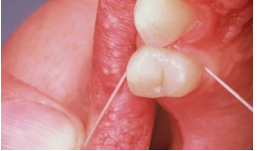


Floss is able to reach into narrow spaces between the teeth where use of an interdental brush may be very difficult and will also remove plaque where two teeth have contact. 


Flossing is certainly technique sensitive.  If floss is used too vigorously, gum tissue can be traumatized.  Typically, dental floss should be wrapped around the 2 middle fingers and stretched to a 12 to 18 inch length. Gently move back and forth in the area where the teeth contact each other, wrapping your floss it in a “C” shape around the side of the tooth. Once the floss is through this contact area it is gently moved under the tissue just until resistance is met. It is important not to “jam” the floss under the tissue, as this pulls on the periodontal ligament and can cause damage to the tissue and result in very sore gum tissue. At this point a cleaning stroke moves the floss away from the gum tissue toward the contact spot. Continue with this 6-8 times until a squeak can be heard and the tooth surface is clean. Then move the floss to the adjacent tooth and do the same. 

Possible limitations of floss:  Back teeth (molars and premolars) often have a more complex anatomy between teeth due to root concavities.  A root concavity is a linear developmental depression in the root surface. In health, root concavities are covered in alveolar bone and actually help secure the tooth in the bone.  Flossing may not access these difficult to clean and plaque retentive areas. So for many periodontal patients, flossing as well as the use of an interproximal brush is necessary.


                                                 (anatomy (with root concavity) of a premolar)

                                                             INTERDENTAL BRUSHES


Interdental brushes (proxabrushes), floss and mechanical devices, are available to remove plaque between the teeth. Clinical studies have shown that manual interdental brushes are particularly effective at reducing plaque and gingivitis. Selecting the sizes and types of interdental cleaning devices that are best for you should include an assessment of the space between your teeth, contact points, areas that retain food, gum shape and position, and periodontal pocketing. 

Interdental brushes, or proxabrushes come in wider or thinner sizes Go-Betweens® (Sunstar Butler), to accommodate the various dimensions of the interdental spaces.  Interdental brushes are available with both coated and uncoated wire, and some include antibacterial agents (chlorhexidine) on the bristles. There are also ultrathin, rubbery versions of interdental brushes called Softpicks and Advanced Softpicks® (Sunstar Butler). Our patients who have dexterity issues often find interdental brushes or Softpicks easier to use than floss.  

There are also mechanical (or vibrating interdental brushes), but they do not seem to be as effective as floss or the manual interdental brushes.  A study of a mechanical interdental device (Interclean) in a German population revealed more plaque than with manual interdental brushes. 5 percent of interdental plaque remained following patient use of manual interdental brushes in this study.   In other studies, the same device was compared to the use of dental floss, and the device and manual dental floss were found to be equally effective in reducing plaque. Based upon the results of these clinical studies, manual interdental brushes are superior and floss is equally effective in reducing plaque.


The article by the AP about flossing has brought dentistry and oral hygiene, particularly flossing, into the news and into people's minds.  For that, we are thankful. Even people who admittedly do not floss, are coming to flossing's defense.  And it certainly opens up some open, some lighthearted and some not-so lighthearted discussion on the topic (many dental hygienists, assistants and dental practicioners are NOT happy with this article or the confusion it could cause!)

Ultimately, the goal of oral good hygiene and good dental care is to prevent, arrest, and control periodontal disease and caries. One's ability to remove plaque from all areas, including interproximal areas, is an essential part of every patient’s selfcare program. Your dentist, dental hygienist, and periodontist can work with you as to which oral hygiene aids are going to improve your oral health by examining the effectiveness of your daily plaque removal routine (measuring your plaque levels and the condition of your gum tissues), as well as selecting and demonstrating the best oral hygiene aids for your lifestyle, ability, health, tooth anatomy, your risk for cavities and your periodontal condition.

Britten Periodontics & Implant Dentistry is a periodontal practice offering patients personalized dental care in implant dentistry in Clearwater, Florida. Dr. Todd Britten received his Bachelor of Science & Doctorate of Dental Surgery from University of Florida, a Master’s Degree and Certificate in Periodontology and Implant Dentistry; and completed extensive training at the Institute of Advanced Laser Dentistry. He is one of the only board-certified periodontists in Pinellas County. He is a member of the American Academy of Periodontology, American Dental Association, Florida Association of Periodontists, Upper Pinellas County Dental Association, Hillsborough County Dental Association, Hillsborough County Dental Research Association and Florida West Coast Dental Association.

To learn more about Dr. Britten and his dental services visit our website at:http://www.clearwaterperiodontist.com or http://www.brittenperio.com or call (727) 586-2681.